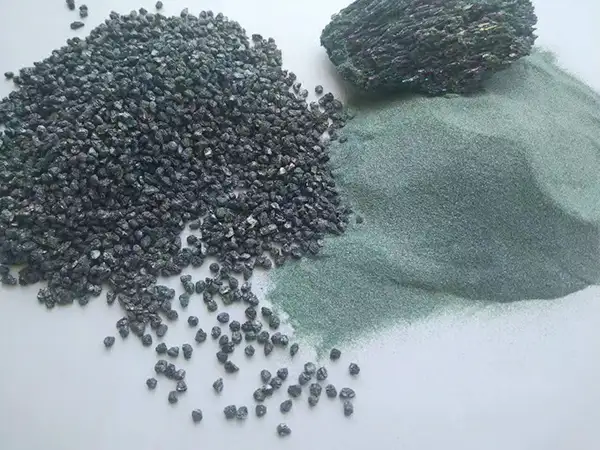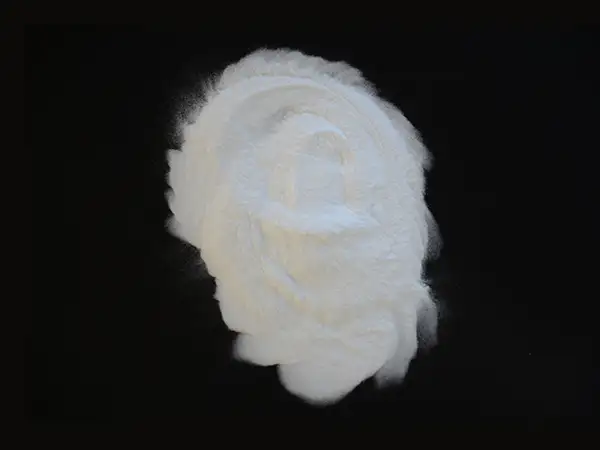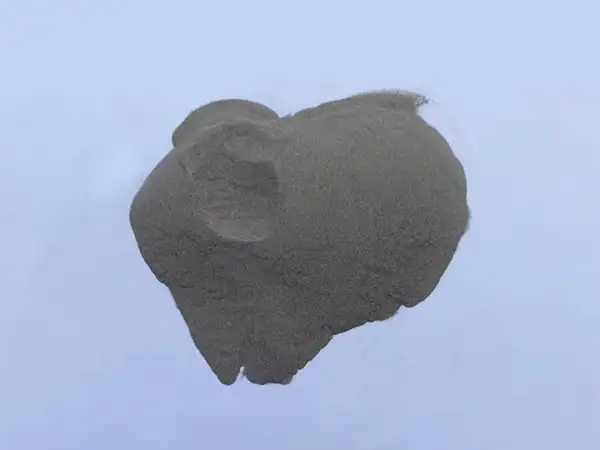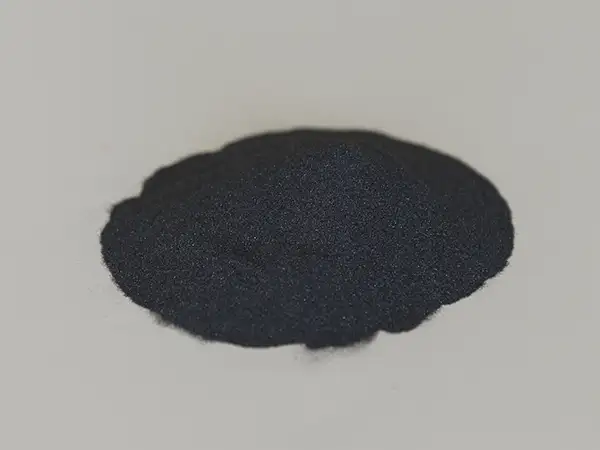
Boron Carbide Micro Powder (chemical formula: B₄C) is an ultra-fine, high-purity ceramic powder renowned for its exceptional hardness, chemical stability, and neutron absorption capabilities. Milled to particle sizes typically ranging from 0.5 μm to 10 μm (with submicron grades available for advanced applications), it exhibits a distinctive dark gray to black, amorphous crystalline structure with a Mohs hardness of 9.3—second only to diamond and cubic boron nitride (CBN).
Boron Carbide Micro Powder (chemical formula: B₄C) is an ultra-fine, high-purity ceramic powder renowned for its exceptional hardness, chemical stability, and neutron absorption capabilities. Milled to particle sizes typically ranging from 0.5 μm to 10 μm (with submicron grades available for advanced applications), it exhibits a distinctive dark gray to black, amorphous crystalline structure with a Mohs hardness of 9.3—second only to diamond and cubic boron nitride (CBN).
• Hardness & Wear Resistance: Exceptional scratch and abrasion resistance, with a Vickers hardness of 30–40 GPa, making it ideal for extreme wear applications.
• Density: Low bulk density (2.52 g/cm³) and true density (2.51 g/cm³), enabling lightweight composite formulations.
• Chemical Inertness: Resistant to oxidation (up to 1000°C in air), acids, and most organic solvents; insoluble in water and non-reactive with most metals at room temperature.
• Neutron Absorption: High boron content (≈78 wt%) grants superior neutron capture ability, critical for nuclear shielding (boron-10 isotope enrichment is optional for enhanced performance).
• Thermal & Electrical Properties: Moderate thermal conductivity (30–40 W/m·K) and semiconductor-like electrical conductivity (10²–10⁴ S/m), suitable for thermally conductive or electrostatic discharge (ESD) materials.
• Particle Size Distribution (PSD): Tight, narrow PSD control (e.g., D50 = 1–5 μm) with minimal agglomeration, ensuring uniform dispersion in matrices (resins, metals, ceramics).
• Purity: High-purity grades (≥99% B₄C) with low levels of impurities (e.g., free carbon <0.5%, boron oxide <1%, iron <0.1%) to avoid performance degradation.
• Morphology: Irregular, angular particle shape (optimized for interparticle bonding) or spherical grades (for improved flowability in additive manufacturing).
1. Abrasives & Polishing: Used as a precision abrasive for lapping, grinding, and polishing hard materials (e.g., tungsten carbide, sapphire, silicon wafers) due to its ability to produce ultra-smooth surfaces (Ra <0.1 μm).
2. Ceramic Composites: Reinforcing phase in ceramic matrix composites (CMCs) for armor plating, cutting tools, and high-temperature nozzles—balancing hardness with fracture toughness.
3. Nuclear Engineering: Neutron shielding components (e.g., control rods, shielding tiles) in nuclear reactors and spent fuel storage, leveraging boron’s neutron absorption without radioactive secondary waste.
4. Wear-Resistant Coatings: Thermal spray (HVOF) or plasma coatings for industrial machinery parts (pump impellers, valve seats) to reduce erosion in harsh environments.
5. Additive Manufacturing (AM): Feedstock for 3D printing (SLS, EBM) of custom ceramic/metal parts, enabling complex geometries for aerospace and defense.
Boron carbide micro powder is non-toxic but may cause respiratory irritation if inhaled; it should be handled in a well-ventilated area with N95/P100 respiratory protection. Store in a dry, sealed container at room temperature to prevent moisture absorption (though it is hydrophobic) and avoid contact with strong alkalis (which may react at high temperatures).
This micro powder is a high-performance material bridging extreme hardness, lightweight design, and functional properties (neutron absorption), making it a staple in advanced manufacturing, defense, and nuclear industries.
More information pls contact us:

Zhengzhou Xiangyu New Material Co.,Ltd
We provide bespoke industry solutions for diverse sectors.